

Choosing home lighting is not simply about buying an attractive chandelier or installing a large number of spotlights. It requires an integrated plan that combines comfort, visibility, aesthetics, and energy efficiency. This guide will help you select the right lighting types, arrange fixtures correctly, and understand lumens, watts, and the most suitable color temperature for every room.
Proper lighting planning highlights interior décor, improves the way spaces are used, reduces shadows and uncomfortable glare, and gives you greater control over the atmosphere of your home throughout the day.
Why Is Home Lighting Planning Important?
Lighting is a fundamental part of interior design. It can change how you perceive the size, colors, and function of a room. Insufficient lighting makes a space look dull and impractical, while excessive brightness may cause eye strain and reduce visual comfort.
Good lighting planning helps you:
- Provide appropriate lighting for every activity
- Distribute light evenly throughout the room
- Reduce shadows and dark areas
- Highlight furniture, walls, and decorative features
- Improve visual comfort
- Reduce electricity consumption
- Control lighting through multiple circuits
- Prepare the home for smart lighting systems
Types of Lighting Inside the Home
A professional lighting design combines several lighting layers instead of relying on a single fixture in the center of the room.
General Lighting
General lighting is the main source that illuminates the entire space. It can be provided through:
- Chandeliers and ceiling pendants
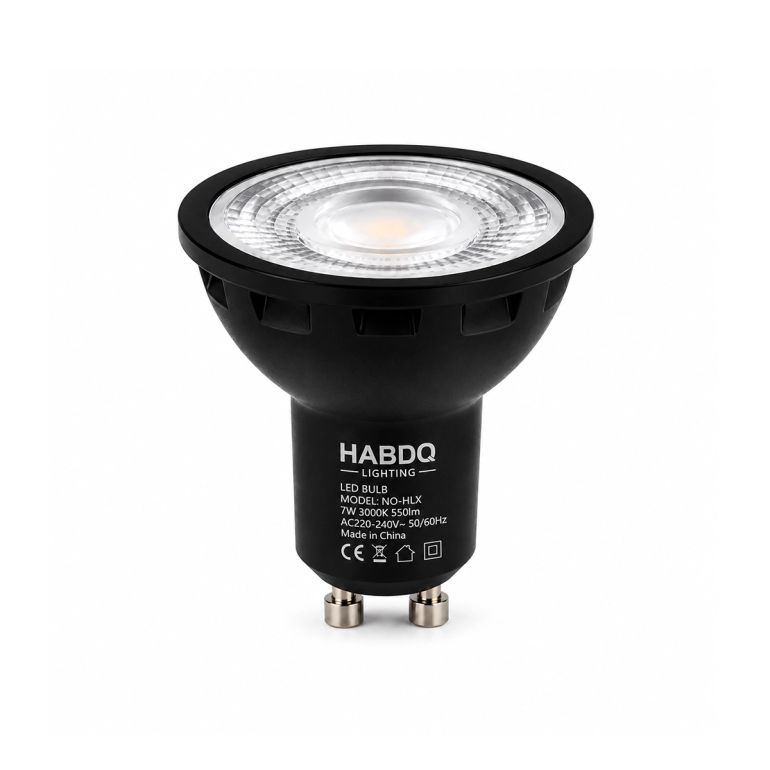
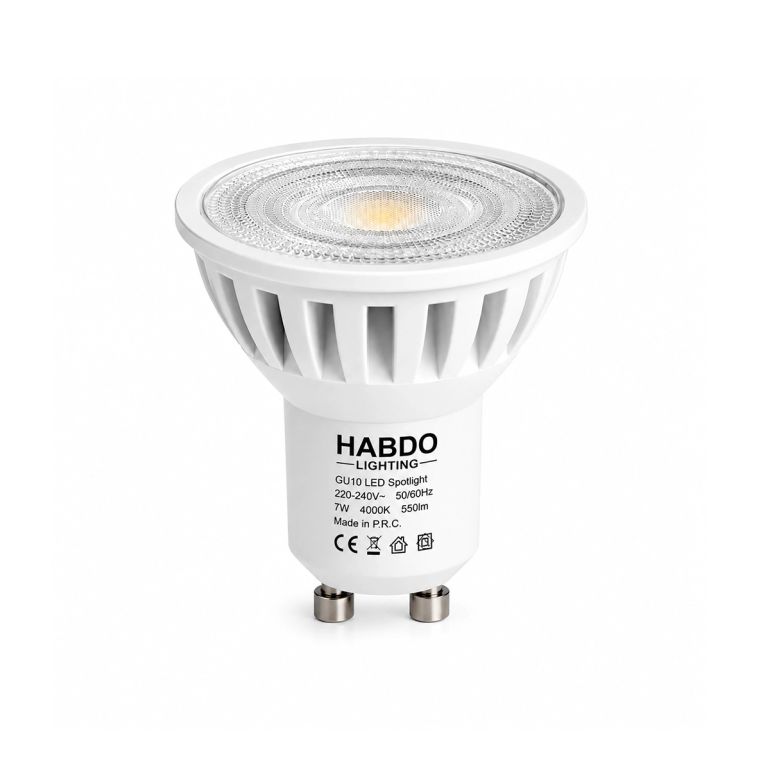
- Spotlights
- Downlights
- LED panels
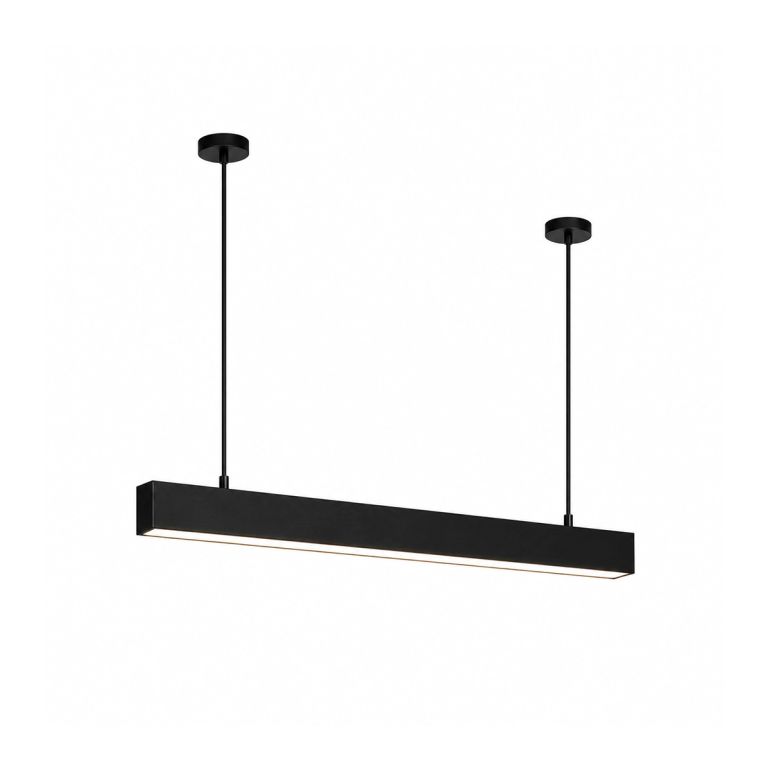
- Linear lighting
- Surface-mounted ceiling fixtures
General lighting should be balanced and comfortable, without creating overly bright or dark areas.
Task Lighting
Task lighting provides additional visibility in areas where specific activities are performed, such as:
- Kitchen worktops
- Study desks
- Bathroom mirrors
- Reading areas
- Dressing areas
- Worktables
Task lighting usually requires a higher level of brightness than general lighting.
Accent Lighting
Accent lighting highlights a specific feature, such as artwork, a decorative wall, a bookcase, or a piece of furniture.
It can be created using adjustable spotlights, track lighting, or magnetic track lighting.
Decorative Lighting
Decorative lighting adds visual character and may become an important part of the interior design, including:
- Chandeliers
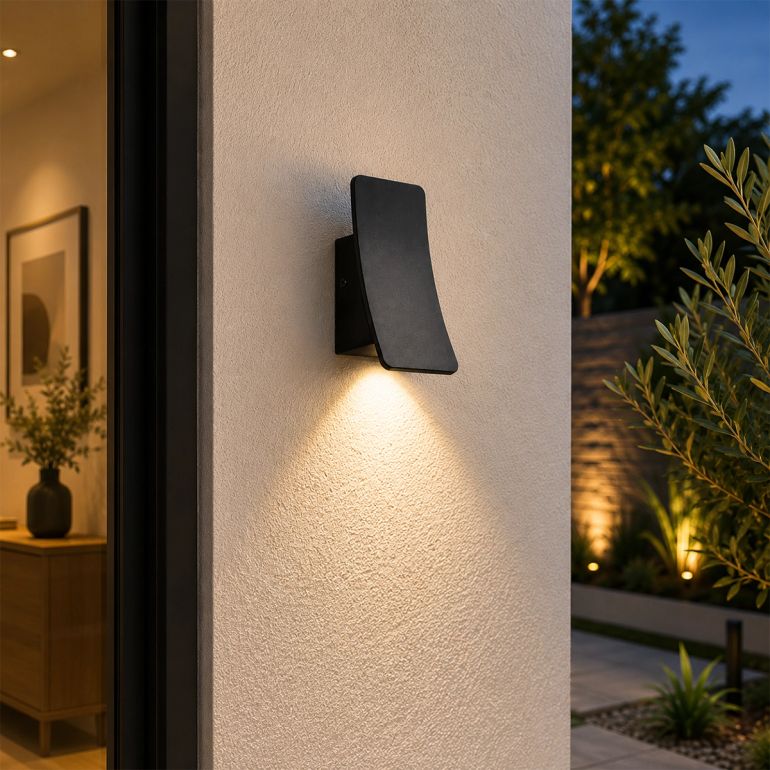
- Wall lights and sconces
- Pendant lights
- Concealed LED strips
- Artistic lighting fixtures
- Lighting inside shelves and cabinets
The best results are achieved by combining general, task, accent, and decorative lighting in one coordinated design.
The Difference Between Lumens, Watts, and Lux
One of the most common mistakes is choosing lighting based only on wattage. To understand lighting product specifications, it is important to know the difference between these basic measurements.
Watts
Watts indicate how much electricity a lighting fixture consumes. They do not indicate the actual amount of light it produces.
An energy-efficient LED lamp may produce more light than an older lamp that consumes considerably more power.
Lumens
Lumens measure the total amount of visible light produced by a lamp. The higher the lumen value, the greater the light output.
When comparing products, check the lumens to understand the actual brightness, then review the wattage to understand energy consumption.
Lux
Lux measures the amount of light reaching a specific surface. The relationship can be simplified as follows:
One lux equals one lumen distributed over one square metre.
Lux levels are affected by ceiling height, the distance between the fixture and the surface, beam angle, and the colors of walls, floors, and furniture.
Recommended Lighting Levels for Different Rooms
The following values are general guidelines. Actual requirements may vary according to room size, ceiling height, surface colors, furniture, and the needs of the user.
Area
Recommended Lighting Level
Living room
100–200 lux
Dining room
150–300 lux
Bedroom
100–150 lux
Reading area
300–500 lux
Kitchen – general lighting
200–300 lux
Kitchen worktop
300–500 lux
Office or study room
300–500 lux
Bathroom
150–250 lux
Mirror area
300–500 lux
Corridors
75–150 lux
A higher lux level does not always mean better lighting. The goal is to provide the right amount of light for the activity while reducing glare.
How to Estimate the Number of Lighting Fixtures
The following formula can provide an initial estimate:
Number of fixtures = Room area × Required lux level ÷ Lumens per fixture
For example, consider a living room measuring 20 square metres, with a target of 150 lux and fixtures producing 600 lumens each:
20 × 150 ÷ 600 = Approximately 5 fixtures
You may need to increase the number slightly to compensate for ceiling height, dark wall colors, furniture layout, or light loss. This calculation is only an initial estimate and is not a substitute for a professional lighting plan for large homes and commercial projects.
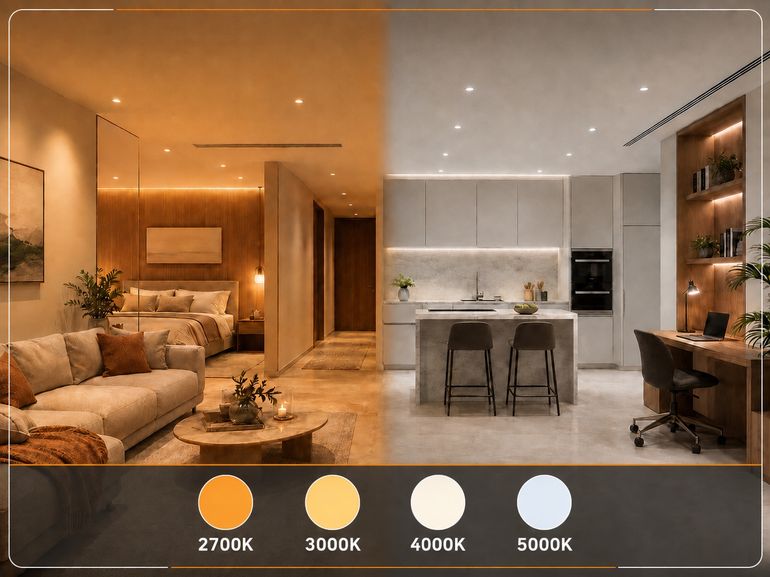
Lighting Color Temperatures
Lighting color temperature is measured in Kelvin. It does not indicate how hot the lamp becomes; it describes the visual appearance of the light.
2700K Lighting
A warm light with a noticeable yellow tone, suitable for:
- Bedrooms
- Traditional majlis and reception rooms
- Family seating areas
- Decorative lighting
3000K Lighting
A balanced warm-white color and one of the most popular choices for residential interiors, particularly in:
- Living rooms
- Dining rooms
- Entrances
- Corridors
- Bedrooms
- Majlis and reception areas
4000K Lighting
A clearer, more neutral-white light, suitable for:
- Kitchens
- Offices
- Study rooms
- Dressing rooms
- Work areas
- Some bathrooms
5000K Lighting
A strong white light suitable for spaces that require greater visibility, such as:
- Utility rooms
- Home storage rooms
- Selected work areas
- Outdoor security lighting
It is generally not recommended for extensive use in bedrooms and living rooms because it may make the space feel harsh and less relaxing.
Related article: Best Lighting Color for the Home and a Guide to Choosing the Right Color Temperature for Every Room.
Color Rendering Index (CRI)
The Color Rendering Index indicates how accurately furniture, clothing, finishes, and decorative colors appear under a light source.
- CRI 80 or higher: suitable for most residential applications
- CRI 90 or higher: recommended for mirrors, dressing rooms, artwork, and spaces requiring more accurate color appearance
Choosing lighting with a high CRI makes colors appear more natural and vibrant, even when the lumen output is the same.
Choosing the Right Beam Angle
The beam angle determines the size of the area covered by a spotlight:
- 15–30 degrees: focused lighting for artwork and decorative features
- 36–60 degrees: suitable for general residential lighting and spotlights
- Wide beam angles: cover a larger area and may reduce the number of required fixtures
A narrow beam produces more concentrated light, while a wider beam distributes light across a larger area.
Lighting Design for Every Room
Living-Room Lighting
The living room requires more than one lighting layer. A chandelier or ceiling fixtures can provide general lighting, while spotlights or magnetic track lighting can highlight the walls. Floor lamps, table lamps, or wall lights can then create a more comfortable atmosphere.
It is recommended to use 2700K or 3000K lighting and divide the fixtures into multiple circuits so each group can be controlled independently.
Avoid directing light towards the television or placing a strong spotlight directly above seating areas.
Majlis and Reception-Room Lighting
A majlis requires lighting that is both comfortable and clear while maintaining an elegant visual appearance. A chandelier can be combined with concealed lighting and spotlights directed towards walls and decorative features.
A color temperature of 3000K is suitable for most reception rooms. A compatible dimmer can also provide better control over brightness.
Bedroom Lighting
Bedrooms should use warm, relaxing lighting. Avoid installing a strong spotlight directly above the bed.
You can combine:
- General ceiling lighting
- Bedside lighting
- Lighting inside wardrobes
- Lighting around the dressing table
- Concealed LED strips
Color temperatures of 2700K and 3000K are suitable for bedrooms.
Kitchen Lighting
A kitchen requires clear general lighting in addition to dedicated lighting for work surfaces.
Lighting should be arranged to prevent the user’s shadow from falling across the worktop. LED strips can also be installed beneath cabinets to illuminate food-preparation areas directly.
Both 3000K and 4000K can be suitable for kitchens, depending on the interior design and required level of clarity.
Dining-Room Lighting
A pendant fixture above the dining table is usually the main visual element. Its size and installation height should match the dimensions of the table.
Soft spotlights can be added around the room or directed towards the walls. A color temperature of 3000K creates a comfortable atmosphere for dining and family gatherings.
Bathroom and Mirror Lighting
Bathrooms require general lighting as well as balanced illumination around the mirror.
Lighting placed on both sides of the face or around the mirror produces fewer shadows than a strong fixture installed only above it.
Select fixtures suitable for humid conditions and check the required IP rating according to the installation location.
Corridor and Staircase Lighting
Corridors need clear lighting without unnecessary brightness. Wide-beam spotlights, linear lighting, or wall lights can provide effective illumination.
For staircases, step lights and low-level wall lighting can improve safety while adding an attractive decorative effect.
Office and Study-Room Lighting
Office lighting should be clear and arranged to prevent reflections on computer screens.
A color temperature of 4000K can be combined with a directed desk lamp. Avoid positioning the main light source directly behind the user or in front of the screen.
Spotlight Selection and Arrangement
Spotlights are among the most widely used lighting products in modern homes, but they require careful planning.
Do not arrange spotlights in an equal grid without considering the position of furniture. Start by identifying seating areas, tables, walls, and decorative features, then place each fixture according to the lighting requirement.
For residential ceilings approximately 2.7–3 metres high, the following measurements can be used as an initial guide:
- Approximately 60–90 cm between the spotlight and the wall
- Approximately 1.2–1.8 metres between fixtures
Actual spacing will vary depending on lumen output, beam angle, and ceiling height.
Related article: How to Arrange Spotlights on a Ceiling Without Gypsum Board.
Magnetic Track and Linear Lighting
Magnetic track lighting provides flexibility because lighting modules can be added, moved, or redirected when required. Available modules may include:
- Adjustable spotlights
- Linear lighting modules
- Pendant lighting modules
- Diffused lighting modules
Aluminium profiles and LED strips can be used for concealed lighting, cabinets, ceilings, walls, and decorative details. The power supply and electrical capacity must be selected according to the type and total length of the LED strip.
Smart Lighting
Smart lighting allows users to control lighting operation, brightness, schedules, and scenes through a mobile phone or voice commands, depending on the selected system.
Smart lighting solutions may include:
- Smart electrical switches
- Motion sensors
- Smart dimmers
- Smart lamps
- Programmed lighting scenes
- Control through Tuya, Google Home, or other compatible platforms
Before purchasing a smart product, verify that it is compatible with the home’s electrical wiring, application, and smart-home platform.
Related article: Smart Electrical Switch Guide and How to Connect It to Tuya and Google Home.
Outdoor Home Lighting
Outdoor lighting includes:
- Façade lighting
- Entrance lighting
- Boundary-wall lights
- Garden and pathway lighting
- LED floodlights
- In-ground lighting
- Garden poles and bollards
Outdoor fixtures should be selected to withstand dust, moisture, and high temperatures. Always check that the IP rating is appropriate for the installation location.
Floodlights should also be directed carefully to reduce glare and avoid disturbing neighbours or directing excessive light towards nearby roads.
Related article: A Guide to Choosing Outdoor LED Floodlights for Villas, Yards, and Warehouses.
Common Home-Lighting Mistakes
- Purchasing lighting fixtures before preparing a lighting layout
- Relying on watts instead of lumens
- Using the same color temperature throughout the home without considering room function
- Installing too many spotlights
- Ignoring the beam angle
- Directing light towards the eyes or television
- Randomly mixing different color temperatures
- Connecting every fixture to a single switch
- Failing to provide dedicated task lighting
- Selecting outdoor fixtures with an unsuitable IP rating
- Carrying out electrical work without a qualified electrician
Tips Before Purchasing Lighting Products
Before buying a lighting product, check:
- Actual lumen output
- Wattage and energy consumption
- Color temperature
- Color Rendering Index
- Beam angle
- Fixture dimensions and cut-out size
- Fixture color and compatibility with the interior design
- Dimming capability
- IP rating for outdoor or humid locations
- Warranty and after-sales support
- Compatibility between drivers, dimmers, and smart switches
Take room dimensions, photographs, and the furniture plan with you when visiting the store. This will help the lighting consultant recommend a more suitable solution.
Frequently Asked Questions
What Is the Best Lighting Color for a Home?
The right color temperature depends on the room. Color temperatures of 2700K and 3000K are suitable for bedrooms and living areas, while 4000K is suitable for kitchens, offices, and work areas.
Are Lumens More Important Than Watts?
Lumens are more important when measuring brightness because they indicate the amount of light produced. Watts indicate electricity consumption.
How Many Spotlights Does a Room Need?
The required number depends on the room’s size, ceiling height, lumen output, beam angle, and target lux level. There is no fixed number suitable for every room.
Is 3000K or 4000K Better?
A color temperature of 3000K creates a warmer and more relaxing atmosphere, while 4000K provides greater visual clarity. The right choice depends on the function of the room and the desired result.
Can More Than One Type of Lighting Be Used in the Same Room?
Yes. Combining general, task, accent, and decorative lighting is recommended for a balanced and flexible lighting design.
Does Smart Lighting Save Electricity?
Smart lighting can help reduce consumption through scheduling, automatic switching, and brightness control. The actual amount saved depends on how the system is used.
Conclusion
Successful home lighting begins with understanding the needs of each room, rather than choosing fixtures based only on appearance. Determine the required lighting level, review the lumens, color temperature, CRI, and beam angle, then arrange the fixtures according to the furniture layout and intended use.
Combine general lighting with task and decorative lighting, and divide the fixtures into independent circuits so you can adjust the atmosphere of the home easily.
For complete lighting solutions for homes, villas, and projects across Saudi Arabia, visit your nearest Lighting Address branch, shop through our online store, or contact us on our unified number: 8001188889.